
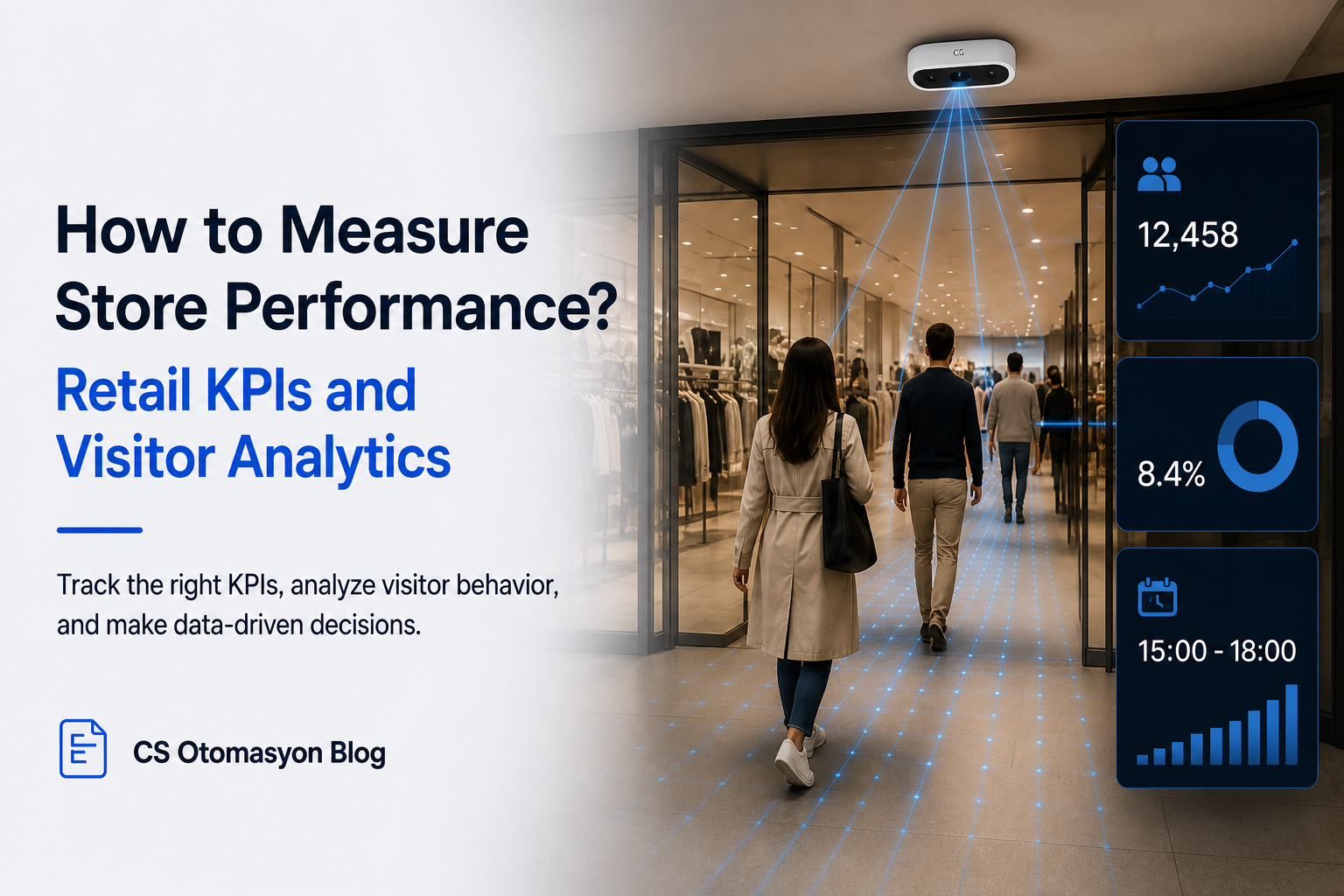
How to Measure Store Performance: Retail KPIs
What Does Store Performance Show?
Store performance is not only a sales result. It shows how effectively a location uses its physical space, workforce capacity, and visitor traffic. Revenue alone cannot provide this context: two stores may reach different sales outcomes with different traffic levels, conversion rates, or staffing requirements.
For example, two stores may have different daily revenue, but revenue per visitor, conversion rate, and service capacity during busy periods can reveal efficiency differences that are not visible at first glance. For managers, measuring the process that produces the result is as important as measuring the result itself.
Core Retail KPIs
- Visitor count: Shows the traffic entering a store by day, week, hour, or another selected period.
- Conversion rate: The ratio of purchasing customers or transactions to total visitors. Its calculation scope and POS definition should remain consistent.
- Peak periods: Shows whether service capacity, checkout resources, and staffing match demand.
- Location benchmarking: Makes traffic, conversion, and operational differences between comparable stores visible.
For a closer look at conversion, read how to calculate retail conversion rate. For traffic and resource use together, see our guide to retail store efficiency analysis.
Why Sales Data Alone Is Not Enough
Lower sales may be caused by lower visitor traffic, weaker conversion, stock availability, queueing, insufficient staffing, or a campaign that did not create the expected impact. Each cause requires a different action. Without visitor data, seeing only the sales result makes it difficult to understand where the issue began.
Turning KPIs into Decisions
KPIs are not goals on their own; they support decisions. High traffic with low conversion can signal a need to examine in-store experience or workforce planning. Lower traffic with strong conversion can point to a different opportunity around campaigns or location attraction. To compare campaign impact with visitor data, read our article on campaign and window display performance.
How Is the Measurement Layer Built?
Physical stores need a reliable data source to measure visitor count and peak periods. Our guide to data-driven store management with people counting systems explains how the data moves from a sensor to reporting and operational decisions.
Conclusion
High-performing stores interpret sales outcomes alongside visitor traffic and operational capacity. The right KPI set makes it easier to see which store, and which time period, needs improvement.