
Retail Sales and Store Management: Roles and KPIs
What Is Retail Sales and Store Management?
Retail sales and store management is much broader than presenting products or services to customers. A store manager brings together sales targets, customer experience, workforce planning, product availability, store layout, and daily operations. The goal is not only to review revenue at the end of the day, but to create a better customer experience and a more efficient operation throughout every trading hour.
In multi-location businesses especially, maintaining the same standards requires managers to rely on comparable data rather than assumptions. A store's sales result is shaped by several factors, including visitor traffic, team capacity, merchandising, campaigns, and service quality.
Core Responsibilities of a Store Manager
- Sales and customer experience: Monitor targets, improve the customer's in-store journey, and resolve service gaps.
- Workforce and shift management: Plan staffing against actual customer demand.
- Product and operations oversight: Keep stock, product availability, store layout, and operational routines aligned with sales goals.
- Location management: Compare similar stores and scale successful practices across a retail network.
Which Data Matters in Store Management?
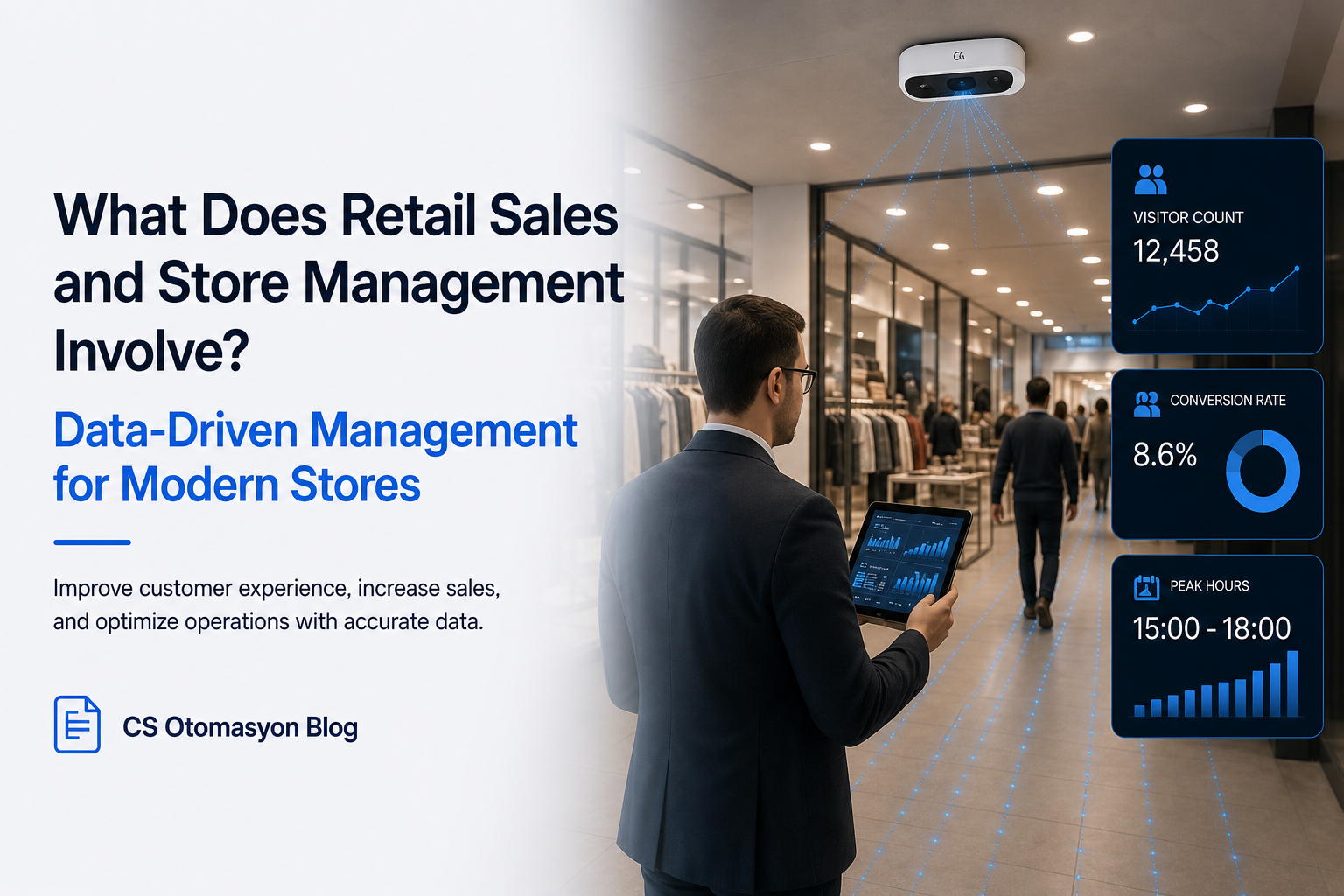
Daily sales data is necessary, but it does not show how many people visited the store or when demand peaked. Managers should therefore review sales alongside visitor traffic, conversion rate, peak periods, and store comparisons. For a deeper explanation of these measures, read our guide on measuring store performance.
Measuring visitor traffic regularly also helps teams plan staffing around real demand rather than opening hours alone. Our guide to staff and shift planning based on store traffic explains this operational link.
Moving to Data-Driven Store Management
Data-driven management does not mean making every decision from a single number. It means asking the right question first, then comparing the relevant information: Did traffic decline, did conversion weaken, or was service capacity insufficient during a specific period? This distinction helps managers select the right action.
People counting systems provide the measurement layer that makes visitor traffic visible in physical stores. To understand how that technology supports operational data, continue to our article on data-driven store management with people counting systems.
Conclusion
Successful store management brings sales, people, customer experience, and operations into one management framework. Reliable traffic and performance data helps managers improve stores more consistently.